Cambridge Economics Challenge
Set by Cambridge economists, with a focus on the core competencies valued in Oxbridge Economics admission tests and interviews.
Registration Deadline:January 11, 2027 Challenge Date:January 22, 2027
Sign up →Contact UsContact Us:info.asia@seedasdan.org
Global
Economics
Challenge
Initiated by the Cambridge Economics Challenge (CEC) Academic Committee.Questions set by Cambridge economists. Open to high school students worldwide.
Economic Theory
&
Critical Thinking
Align with A-Level curriculum, with emphasis on logical reasoning, economic analysis and critical against the talent-thinking, benchmarked selection standards of Oxbridge and other G5 universities.
Graded at Cambridge •
Recognised with Prestigious
Awards
All entries are marked by the Cambridge Economics Challenge (CEC) Academic Committee at Cambridge. Students' economic thinking and analytical capabilities areassessed against rigorous academic standards, with highly prestigious awards on offer.
St Catharine's College,
Cambridge Economics Camp
Officially supported by St Catharine's College, Cambridge. Award winners are invited to the advanced economics camp at Cambridge.
Well-Received in the UK
Cambridge Economics Challenge Introduction
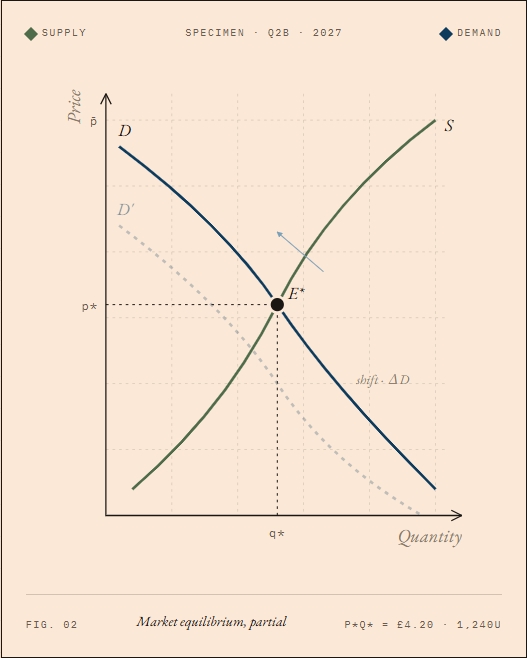
The Cambridge Economics Challenge is a global academic challenge for high school students — a paper set by Cambridge economists, drawing on the tradition of Alfred Marshall, John Maynard Keynes and Joan Robinson, and designed to reward the kind of thinking the discipline actually asks of you. (official UK website:https://cecl6.com/)
Rooted in the Cambridge tradition of economics, Cambridge Economics Challenge asks students to reason rather than merely recall knowledge from textbooks. The challenge focuses on logical deduction, data analysis, argument construction and critical thinking. These competencies are not only an essential foundation for economic research but also the core academic qualities that Oxbridge, and other world-leading universities highly value in selecting and cultivating economics talent.
The challenge is open to high school students studying A‑Level Economics or equivalent courses. No prior knowledge of university‑level economics is required. The questions deliberately sit beside the syllabus rather than on it. Students will not be asked to recall, but to reason.
In 2026, the Cambridge Economics Challenge was successfully launched in the UK, attracting nearly 2,000 students from almost 100 UK schools. The top 10% of participants were invited to attend Economics Camp at St Catharine's College, Cambridge.
To bring this academic opportunity to outstanding students from more countries and regions, the Cambridge Economics Challenge has collaborated with the (ASEEDER) to jointly promote the development of the challenge beyond the UK. Outstanding award-winning students from around the world will also have the opportunity to participate in Economics Camp officially organized by St Catharine's College, Cambridge.(Official website: https://cecl6asia.com)
The Cambridge Economics Challenge aims to build a bridge connecting talented high school students worldwide and the academic tradition of Cambridge economics. The challenge looks beyond academic excellence alone, seeking students who dare to ask "why", who have the skills to understand complex arguments and analyse practical issues and data, and who progressively learn to think like an economist.
You will not be asked to RECALL ; you will be asked to REASON
Advancement Qualification
Jan 22, 2027

Cambridge Economics Challenge
(Invitation for Outstanding Award Winners)
July 2027

St. Catharine's College
Cambridge Economics Camp
St. Catharine's College Cambridge Economics Camp
Founded in 1473, St Catharine's College, Cambridge, has built a distinguished academic legacy and is renowned for its strengths in interdisciplinary research and its commitment to cultivating future leaders with innovative thinking.
Recognising outstanding performers from internationally recognised academic Olympiads and high-level subject competitions, St Catharine's College has officially supported Cambridge Economics Challenge to offer high level academic camps in economics. During the program, students will experience a unique blend of academic and cultural immersion at Cambridge.
Academics

Macroeconomics
From the perspective of the overall operation of the economy, understand the interaction between economic growth, economic fluctuations and macroeconomic policy, and analyse major economic shocks and their transmission mechanisms.

Microeconomics
From the perspective of consumers, corporates and markets, understand price mechanisms, resource allocation and market competition, and analyse efficiency and welfare outcomes under different market structures and policy interventions.

Economic Analysis
Use economic theory and models to identify effective methods to address real-world economics issues. Weigh multiple factors to form a logical and data-supported economic judgment.

Econometrics Reasoning
Use statistical models and combine the given data to verify the accuracy of the conjecture, the conclusion can be derived.
Academic Core —— Economics x Logical Reasoning
Click to view
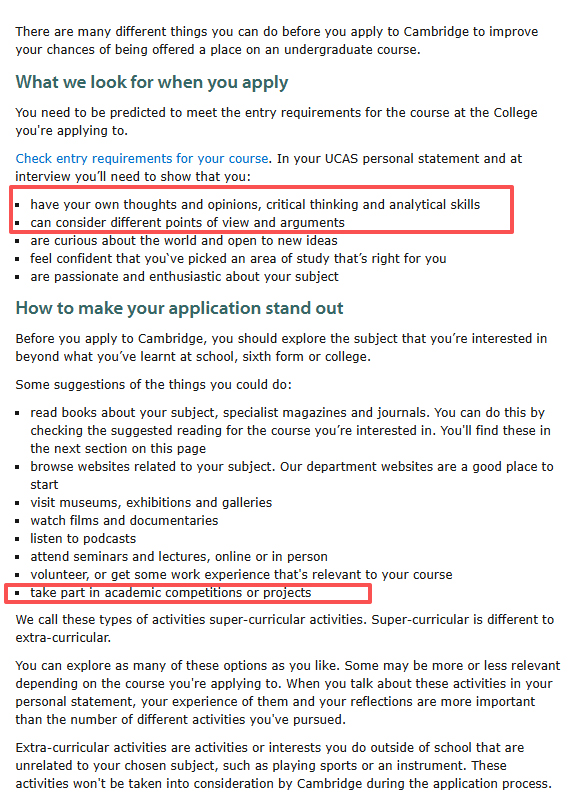
The University of Cambridge seeks students with independent thoughts, critical thinking and analytical skills. Its undergraduate Economics course not only emphasizes rigorous logical deduction and data analysis using mathematical and statistical tools, but also encourages integrating historical, political and social perspectives to understand economic issues. Critical thinking and multi dimensional analysis are therefore key admission requirements.
Economics is not about memorizing theories; it is a social science that relies on rigorous logic to explain reality. From identifying problems and building models to analyzing data, deducing impacts and weighing policies, every step requires clear causal logic. Critical thinking helps students distinguish cause and effect from correlation, avoid one-sided judgments, and comprehensively assess the short and long-term impacts of economic policies.
The academic core of the Cambridge Economics Challenge is highly aligned with the education and admissions. It focuses on assessing problem decomposition, cause-and-effect deduction, logical argumentation and multi-dimensional analysis, helping students cultivate the core academic qualities valued in economics study and selection at top universities.
Sample Question
Setting interest rates is among the most consequential decisions a central bank makes -and one of the most contested.To make the trade-off between price stability and full employment transparent, central banks from Frankfurt to Mumbai have at various times turned to simple rules that link the policy rate to current inflation, an inflation target, and the gap between actual and potential output.The mechanical clarity is appealing, but the coefficients on each term embed value judgements about the central bank’s response.
The rule below, and the questions that follow, examine how those judgements shape outcomes.
A central bank uses the following rule to set its interest rate:
i = r* + π + 0.5(π − π*) + 0.5(y − y*)
where
i = nominal interest rate,
r* = long-run real interest rate,
π = current inflation,
π* = inflation target,
y = current real output,
y* = potential output,
(y − y*) = the output gap.
For all parts of this question, assume the following values for the central bank’s economy:
r* = 2%
π* = 2%
π = 5%
(y − y*) = − 1% (output is 1 percentage point below potential)
a) A second economy is identical except that its output is 2 percentage points above potential rather than 1 percentage point below.
By how many percentage points does the rule prescribe a higher policy rate in this second economy compared with the first? (2 marks)
b) The Taylor Principle states that a central bank must raise nominal rates by more than one-for-one with inflation to achieve real tightening. Does raising the coefficient from 0.5 to 1.5 satisfy the Taylor Principle? Why/why not? (2 marks)
设定利率是中央银行所做的最具深远影响的决策之一,也是最富争议的决策之一。为了使物价稳定与充分就业之间的权衡关系更加透明,从法兰克福到孟买的中央银行都曾诉诸于简单规则,将政策利率与当前通胀、通胀目标以及实际产出与潜在产出之间的缺口挂钩。这种基于公式的清晰性颇具吸引力,但其中每一项的系数都内含着对央行应对方式的价值判断。下文给出的规则以及随之而来的问题,旨在考察这些价值判断如何塑造政策结果。一家中央银行使用以下规则设定其利率:
i = r* + π + 0.5(π − π*) + 0.5(y − y*)
其中:
i = 名义利率
r* = 长期实际利率
π = 当前通胀率
π* = 通胀目标
y = 当前实际产出
y* = 潜在产出
(y − y*) = 产出缺口
对于本题的所有部分,假设该央行所在经济体的取值如下:
r* = 2%
π* = 2%
π = 5%
(y − y*) = − 1%(产出低于潜在产出 1 个百分点)
a) 第二个经济体与上述经济体完全相同,唯一区别是其产出高于潜在产出2 个百分点,而非低于潜在产出 1 个百分点。根据该规则,第二个经济体的政策利率应比第一个经济体高出多少个百分点?(2 分)
b) 泰勒原则(Taylor Principle)指出,央行要实现实际紧缩,必须将名义利率的升幅设定为高于通胀的升幅(即名义利率上调幅度要超过通胀上升幅度)。将系数从 0 .5提高到 1.5 是否满足泰勒原则?为什么?(2 分)
Setting interest rates is among the most consequential decisions a central bank makes -and one of the most contested.To make the trade-off between price stability and full employment transparent, central banks from Frankfurt to Mumbai have at various times turned to simple rules that link the policy rate to current inflation, an inflation target, and the gap between actual and potential output.The mechanical clarity is appealing, but the coefficients on each term embed value judgements about the central bank’s response.
The rule below, and the questions that follow, examine how those judgements shape outcomes.
A central bank uses the following rule to set its interest rate:
i = r* + π + 0.5(π − π*) + 0.5(y − y*)
where
i = nominal interest rate,
r* = long-run real interest rate,
π = current inflation,
π* = inflation target,
y = current real output,
y* = potential output,
(y − y*) = the output gap.
For all parts of this question, assume the following values for the central bank’s economy:
r* = 2%
π* = 2%
π = 5%
(y − y*) = − 1% (output is 1 percentage point below potential)
a) A second economy is identical except that its output is 2 percentage points above potential rather than 1 percentage point below.
By how many percentage points does the rule prescribe a higher policy rate in this second economy compared with the first? (2 marks)
b) The Taylor Principle states that a central bank must raise nominal rates by more than one-for-one with inflation to achieve real tightening. Does raising the coefficient from 0.5 to 1.5 satisfy the Taylor Principle? Why/why not? (2 marks)

Scan the QR code to see more sample questions
Awards
SOVEREIGN

Awarded to the highest-scoring entrants, recognising exceptional economic reasoning and data interpretation.
CROWN

Strong performance across the paper, with clear and well-reasoned answers to the applied questions.
MINT
MINT

A solid grasp of the paper's fundamentals and approaches.
All participants receive a certificate of participation. | Award winners will be invited to the St. Catharine's College, Cambridge Economics Camp.
Challenge Rules
Format
Multiple-Choice Questions + Short-Answer Questions (75 minutes)
Location
Online
Eligibility
Grade 10-12/Year 11-13
Language
English
Registration Deadline
January 11, 2027
Challenge Date
January 22, 2027